

Vestland CCUS 2025 – a platform for knowledge and collaboration
On November 27, Vestland CCUS 2025 brought together around 100 participants for a full day of knowledge sharing and networking in Bergen. The event was organized by NORCE and the University of Bergen, in collaboration with Energiomstilling Vest, the Centre for Sustainable Subsurface Resources, and with support from CLIMIT. The goal is to maintain a regional meeting place for stakeholders in carbon capture, utilization, and storage (CCUS), and to strengthen dialogue between research, industry, and public authorities. The program was diverse and engaging, featuring presentations, panel discussions, and demonstrations that highlighted technological, political, and legal aspects of CCS.
NORCE played a key role with several presentations on CO₂ transport and storage and moderated the industry panel discussion. Representatives from Equinor, Northern Lights, Aker BP, and the Norwegian Offshore Directorate shared their perspectives on how to accelerate CO₂ storage in Norway and Europe. The discussion also addressed challenges that need to be solved, including better coordination between capture and storage projects, cost reduction through standardization and scaling, and the fact that financing remains a major bottleneck for faster progress.
The University of Bergen contributed important insights, including a presentation on legal frameworks for cross-border CCS fields and shared aquifers. One of the day’s highlights was “From Lab to World: The Traveling FluidFlower Experience” by Martin Fernø. FluidFlower is not only a research tool but also an educational concept that makes carbon storage understandable for both children and adults. During lunch, participants experienced a live demonstration of CO₂ injection in Northern Lights geometry, illustrating how storage actually takes place beneath the seabed. This helps build public understanding and engagement around solutions that are essential for achieving climate goals.
The second panel discussion, “What is the way forward for CCS?”, explored political and industrial perspectives on the future. The conversation emphasized that Mongstad, Norway’s largest single source of CO₂ emissions, together with planned new facilities, could provide a basis for further development of storage infrastructure. The panel also highlighted that the cost of inaction must be part of the equation and that CCS is both climate policy and industrial policy. Knowledge about CCS remains low, even among politicians, and research communities need to work more actively on outreach. Collaboration between different actors was identified as key to success, and strong interest from international delegations shows that Vestland CCUS plays an important role in putting Norway on the map. Politicians Linda Monsen Merkesdal (Labour Party) and Tom Georg Indrevik (Conservative Party) participated in this discussion alongside representatives from industry and the waste sector.

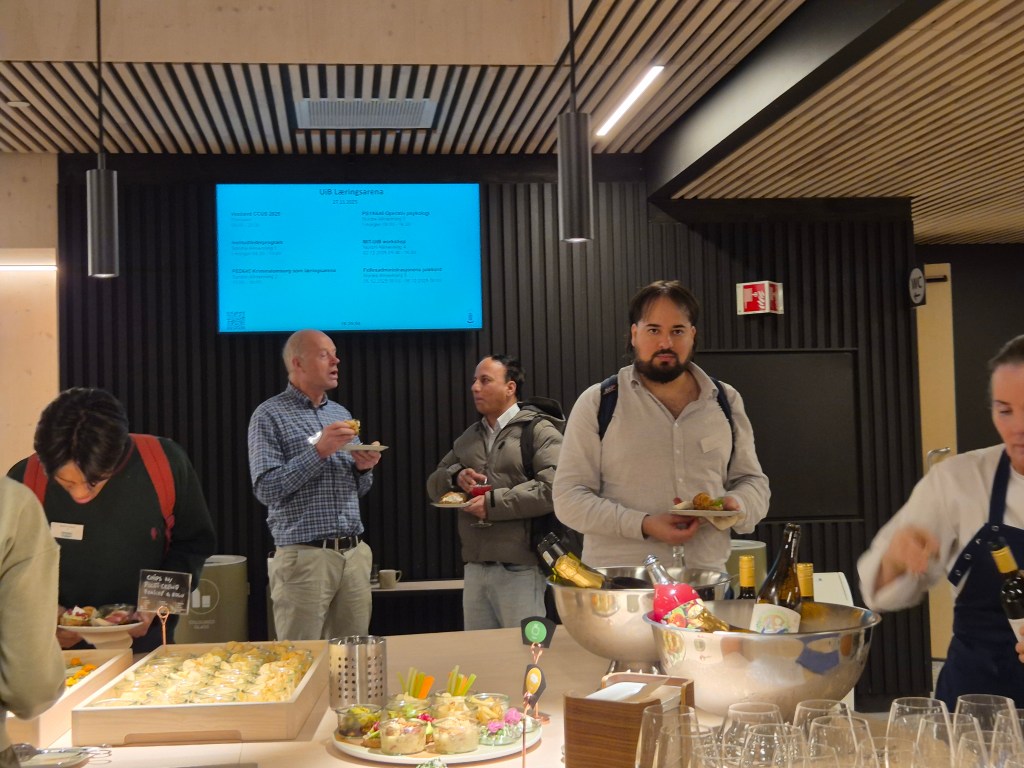


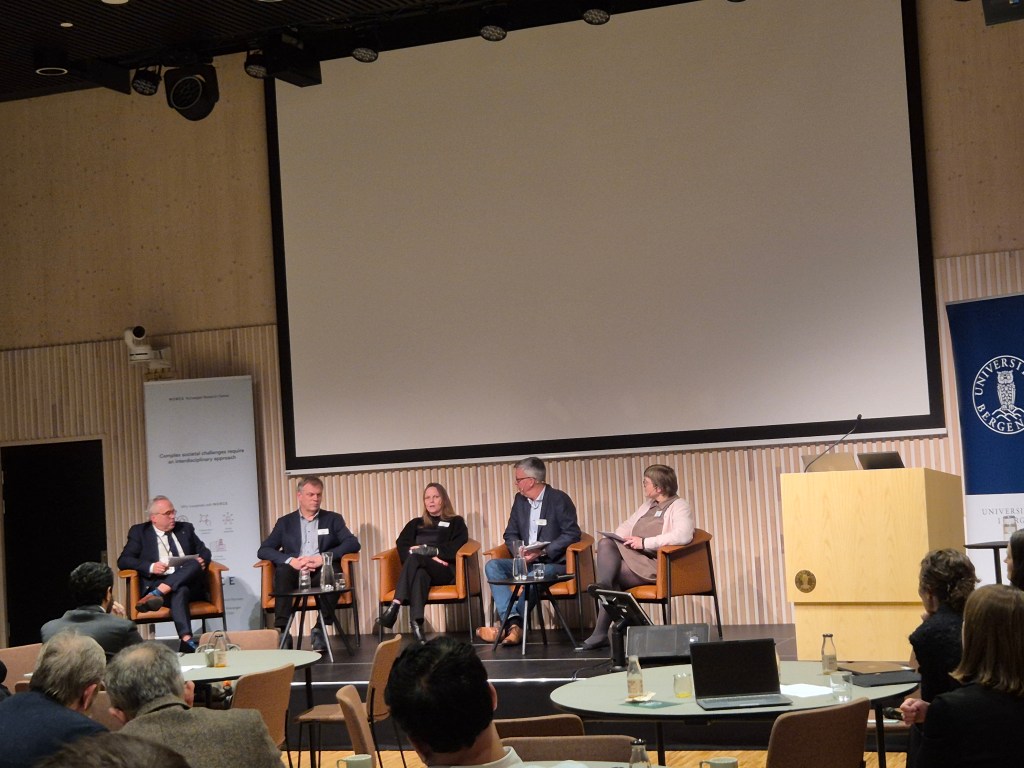
Participants at the conference.